Recruitment Trends for Q2 2026 and what I’m hearing next…
Every quarter I like to take a step back and reflect on the conversations I’ve been having across the industry.
One of the biggest advantages of what I do is that I spend my days speaking to agency owners, HR professionals, venue leaders and C-suite decision-makers from across the live events and experiential sector. Those conversations often tell me far more about the health of the market than any headline ever will.
Looking back over Q2, I’ve come away feeling cautiously optimistic. Businesses are still busy, projects are still moving forward and demand certainly hasn’t disappeared. What has changed is confidence. More organisations are questioning the timing of decisions, taking longer to commit and looking for greater certainty before making significant investments in people.
That doesn’t mean recruitment has stopped. Far from it. In many cases, businesses know exactly what they need to do. They’re simply hesitating before pressing the button. That hesitation has become the defining feature of the last three months and, in my opinion, explains far more about the current market than any economic forecast.
With that in mind, here are the six biggest trends I’ve noticed during Q2, along with a few thoughts on what I think we’ll see over the rest of the year.
1. Confidence Is the Issue, Not Demand
If there’s one theme that’s dominated almost every conversation I’ve had over the last three months, it’s confidence. While the headlines continue to paint a fairly bleak picture of the economy, that’s not really what I’m hearing from the businesses I work with. Most agencies are busy, they’re delivering strong pipelines of work and they fully expect to recruit. The issue isn’t a lack of demand. It’s a lack of confidence to commit.
I’ve lost count of the number of business leaders who’ve told me they know they need another person, can see the pressure their teams are under and already have a role in mind. They’re just waiting a little longer before making the decision. For me, that’s a very different market to one that’s slowing down. It feels much more like a market that’s paused for breath while people look for reassurance that they’re making the right long-term decision.
I also think it’s important not to confuse caution with negativity. Delaying a decision isn’t the same as cancelling it. Most of the organisations I’m talking to still expect to recruit. They still have ambitious plans, healthy pipelines and confidence in their businesses over the longer term. They’re simply looking for a little more certainty before making commitments that will shape the next few years rather than the next few months.
My instinct is that, once confidence starts to improve, we’ll see a lot of organisations move surprisingly quickly. The demand is already there. It’s simply waiting for someone to press the button.
2. Decisions Are Being Delayed, Not Cancelled
That leads naturally into the second trend I’ve been seeing, which is the growing length of decision making. Recruitment processes, investment decisions and new projects all seem to be taking considerably longer than they were this time last year, largely because more people now want to be involved before anything significant is signed off.
Not that long ago, a managing director could identify a need, agree a budget and start recruiting. Increasingly, that same decision is passing through finance, operations, senior leadership teams and, in some cases, the board before anyone is prepared to give it the green light. I can understand why. Nobody wants to be remembered as the person who made an expensive decision at the wrong time, particularly when there’s so much uncertainty surrounding the wider economy.
The interesting thing, though, is that the roles themselves often haven’t disappeared. In many cases, neither has the budget. The requirement is still there and the business still knows it needs additional resource. The only thing that’s changed is the speed at which that decision is being made.
There is, however, a consequence to that caution. Every week a role remains vacant, somebody else has to absorb the work. Every delayed decision increases the pressure on the people who are already delivering for the business, and that’s something I think more organisations need to keep front of mind.
3. Existing Teams Are Carrying the Cost of Caution
This has become one of the biggest leadership conversations I’m having at the moment.
When vacancies stay open for longer, the work doesn’t simply disappear. Projects still need delivering, clients still expect the same level of service and deadlines don’t suddenly become any more forgiving. More often than not, it’s the existing team that bridges that gap.
The people who care most about the business are usually the first to step up. They’ll work the extra hours, cover another role and do whatever they can to support their colleagues because that’s simply who they are. The danger is that many leaders begin to see that goodwill as something they can rely on indefinitely. In reality, it’s a finite resource.
I’ve found myself encouraging leaders to have better conversations with their teams. Rather than asking a quick “How are you?” as you pass someone’s desk, take the time to ask, “No, seriously, how can I help?” There’s a big difference between checking in because you feel you should and checking in because you’re genuinely prepared to do something about the answer.
Most people understand why businesses are being cautious. They read the same headlines as everyone else. What they want is to know that the additional effort they’re putting in has been noticed and appreciated. That might mean recognition, flexibility, support or simply an honest conversation, but those moments matter far more than many leaders realise.
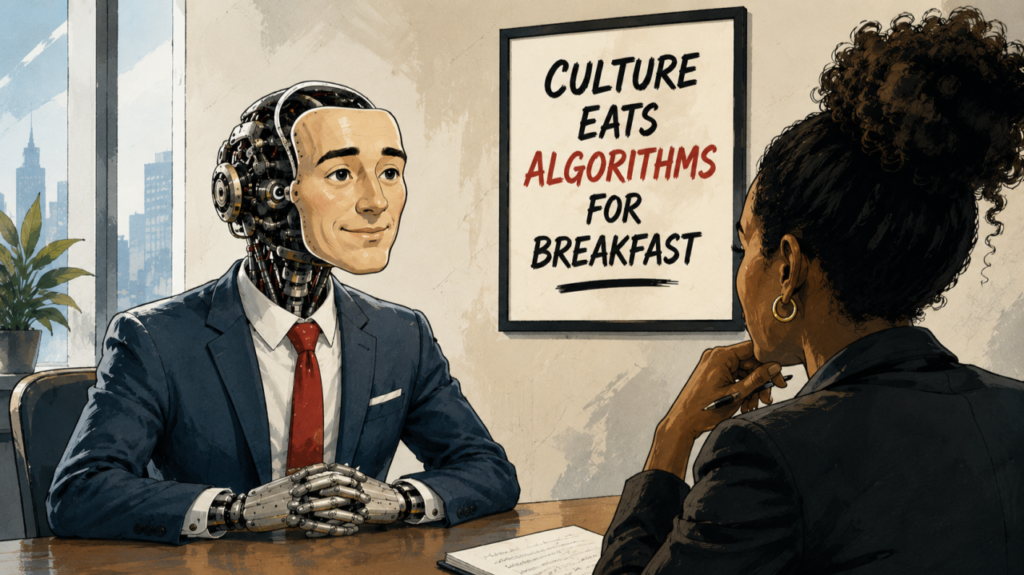
We spend a lot of time talking about culture within our industry, but I don’t think culture is really tested when business is booming. It’s tested when people are under pressure, when difficult decisions have to be made and when teams are being asked to go the extra mile. The organisations that support their people during those periods won’t just protect morale today. They’ll be in a much stronger position to retain their best talent when confidence returns and the recruitment market gathers pace again.
4. AI Has Moved from Experimentation to Expectation
It’s impossible to look at the last quarter without talking about AI. Twelve months ago, most of the conversations I was having were about whether businesses should be using it. Now, those conversations have moved on considerably. The question is no longer whether AI has a place in the workplace. It’s how organisations are using it to improve the way they operate.
The businesses I’m seeing gain the biggest advantage aren’t using AI to replace people. They’re using it to remove repetitive tasks that consume time without adding much value. That allows their teams to spend more time doing the work that really makes a difference, whether that’s building client relationships, solving problems, developing ideas or simply having better conversations.
I can certainly see that in my own business. AI probably gives me at least a day back every week, but that doesn’t mean I’m working less. It means I’m spending more time talking to clients, interviewing candidates, networking and developing relationships. Those are the parts of my job that create the greatest value, and they’re also the parts that technology can’t replicate.
One thing I do feel quite strongly about is that people won’t lose their jobs to AI. They’ll lose them to people who know how to use AI better. That may sound like a bold statement, but I genuinely believe organisations that invest in helping their people embrace AI now will have a significant advantage over the next few years. Like every technological shift before it, the winners won’t necessarily be the businesses with the best software. They’ll be the ones whose people know how to use it most effectively.
5. Experiences Are Becoming More Premium, Not Bigger
Another trend I’ve noticed has been the way organisations are investing in events and employee engagement. While many businesses are still managing costs carefully, I’m seeing a clear shift in priorities. Rather than trying to create larger events, they’re putting more emphasis on creating better experiences.
When I talk about premium experiences, I don’t necessarily mean spending more money. Premium isn’t always about budget. More often than not, it’s about thought. Better content, more meaningful networking opportunities, greater personalisation and experiences that leave people feeling genuinely valued rather than simply entertained all have a far greater impact than increasing the size of an event for the sake of it.
I’ve always believed that people remember how an experience made them feel long after they’ve forgotten the finer details. If somebody leaves an event thinking their company genuinely values them, that’s a far more powerful outcome than simply delivering a bigger production or a more expensive venue. The organisations getting this right are designing experiences around the audience rather than around the budget, and I think that’s a trend we’ll continue to see.
6. Flexibility Has Become a Competitive Advantage
The conversation around flexible working also feels as though it’s matured over the last few months. More businesses are asking people to spend additional time in the office, particularly in senior leadership positions, but the organisations impressing me most aren’t the ones measuring attendance. They’re the ones focusing on outcomes.
The really good employers trust their people. They understand that somebody leaving early for a school play, starting later because of a doctor’s appointment or occasionally working from home isn’t automatically a problem to solve. The conversation is less about where somebody happens to be sitting and more about making sure the work gets done to the standard expected.
For me, flexibility has become a genuine competitive advantage. People have lives outside work, and the employers who recognise that without compromising expectations are building stronger cultures as a result. They tend to attract better people, retain them for longer and create environments where trust runs in both directions. That’s not about lowering standards. If anything, I think it raises them because people are far more likely to go the extra mile when they feel trusted in the first place.
My Forecasts for the Months Ahead
Looking ahead, there are four areas I’ll be watching particularly closely over the second half of the year.
The first is the Middle East. With travel restrictions easing and confidence beginning to return, I expect the events market there to recover quickly. The region has invested far too much in becoming a major international destination to stand still for long, and I think we’ll see organisers, venues and destinations working incredibly hard to attract international events back. That’s undoubtedly good news, although it may also create fresh recruitment challenges as demand for experienced talent begins to increase again.
The second is talent shortages. At the moment, it appears there’s a healthy supply of candidates available, but I think that’s slightly misleading. Over the last few years, a number of experienced professionals have quietly left the industry altogether because they’ve grown tired of the uncertainty. When confidence returns and businesses begin recruiting properly again, I suspect we’ll discover that many of those people simply aren’t coming back. That will make experienced commercial leaders, client services professionals and senior operational talent increasingly difficult to secure over the next 12 months.
Thirdly, I think the businesses that gain market share won’t necessarily be the biggest. They’ll be the ones prepared to make decisions while others continue to wait. Every period of uncertainty creates opportunities for organisations that are willing to invest when others hesitate. In many ways, that’s one of the reasons I was so excited to launch Disrupt Search. If I genuinely believe businesses should be confident enough to invest during uncertain times, then I have to be prepared to follow that advice myself.
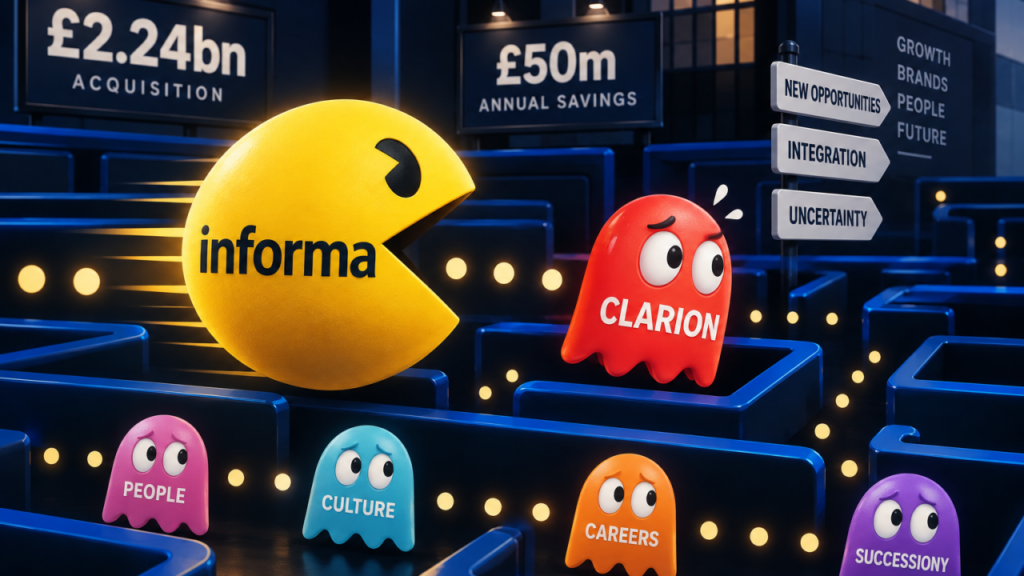
Finally, I think we’re only just beginning to see the real impact of last year’s mergers and acquisitions. The headlines focused on the deals themselves, but what I’m seeing now is the people side of those decisions. Changes in culture, restructures, redundancies and employees questioning whether the business they originally joined is still the same organisation today are becoming increasingly common. The businesses that communicate openly, involve their people and invest in them throughout those periods of change will, I believe, emerge much stronger than those that don’t.
In Summary
If I had to sum up Q2 in a sentence, I’d say this has been a quarter defined less by a lack of opportunity and more by a lack of confidence. Businesses remain busy, demand is still there and recruitment certainly hasn’t stopped. Decision-making has slowed, however, which means existing teams are carrying greater pressure and leaders are being challenged to support their people more effectively than ever before.
Despite that, I remain optimistic about what’s ahead. Every conversation I have reinforces my belief that our industry is in a stronger position than many people think. The work is there. The ambition is still there. Confidence is the missing ingredient, and once that starts to return, I think we’ll see the market gather momentum remarkably quickly.
As always, these observations are simply my perspective based on the conversations I’m fortunate enough to have every day across our industry. I’d be genuinely interested to hear whether you’re seeing the same trends within your own business, or whether your experience has been different. One of the things I enjoy most about writing these quarterly updates is the conversations they create afterwards, so if something resonates or you see things differently, I’d love to hear from you.
Whether you're ready to recruit today or simply
thinking ahead, let's have a conversation.