AI is changing hiring. Just not how I expected.
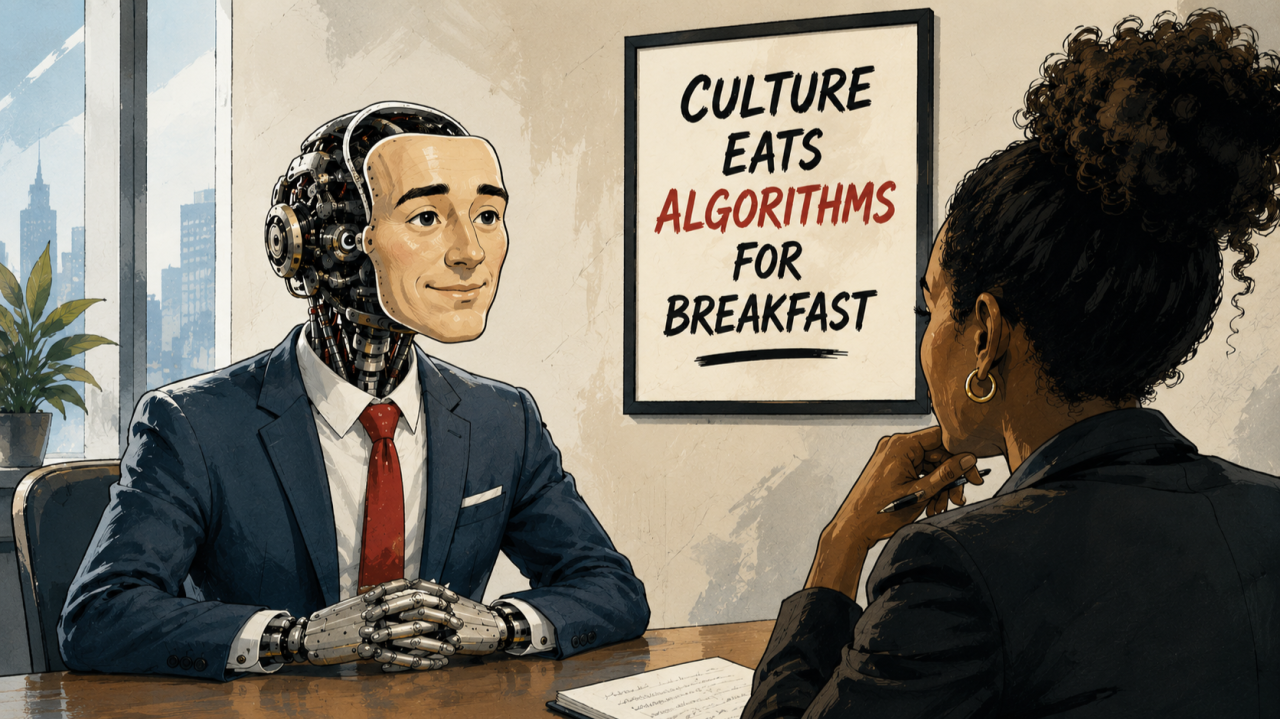
Something slightly strange is happening in recruitment. The better technology gets at helping us present ourselves, the harder it’s becoming to work out who is actually any good.
AI has obviously changed an enormous amount in a very short space of time. Candidates can now take a CV, add a job description and within minutes have an application that looks incredibly well matched to the role. They can research the company, prepare for likely interview questions and work out how best to articulate their experience before they’ve even spoken to anyone. I don’t actually think there’s anything wrong with that. I use AI constantly myself, so I’m certainly not going to start telling other people they shouldn’t.
The problem comes when everybody starts looking brilliant.
I’m seeing CVs now that are incredibly polished. The language is right, the achievements are beautifully articulated and, unsurprisingly, lots of the terminology mirrors exactly what the employer has asked for. When you’ve been doing this for as long as I have, you can often spot where AI has had a helping hand, but even then it creates a much bigger question for employers.
How much can you really trust what you’re seeing on paper?
I think there’s an interesting parallel with the events industry here. We spent years being told that technology would reduce the need for people to travel to meetings and events, then Covid arrived and suddenly we had no choice. Everything went online. It worked, to a point, but as soon as people were allowed back into rooms together, they came back.
Event attendance and face-to-face networking matter because there are things you simply cannot replicate through a screen. You pick up the little things, you have the conversation you weren’t expecting to have, you read someone’s reaction and you start to understand the person rather than just the information they’re giving you.
I think hiring is beginning to experience its own version of that.
I’d been mulling this over when I saw a Bloomberg article this week about employers beginning to move back towards live assessments, referrals, networking and recommendations as AI-generated CVs make candidates increasingly difficult to differentiate. The opening observation was wonderfully simple: “Every resume is perfect.”
At the senior end of the market, I’m far less interested in somebody telling me they’ve “transformed” something than I am in understanding what that actually means. What did you inherit? What was wrong with it? What did you personally change? Who disagreed with you? What happened when it didn’t go to plan? What were the numbers before you arrived and what were they afterwards? If I speak to your old CEO, are they going to tell me the same story?
Those conversations have always been important, but I think they’re becoming much more important now.
A CV should open the conversation, not prove the case.
The same applies to interviews. If candidates can use AI to predict the questions they’re likely to be asked and prepare beautifully constructed answers, employers need to become much better at interviewing. I don’t mean making the process harder or adding another three stages.
Anyone who has read my stuff before will know I’m hardly an advocate for making recruitment take longer.
I mean proper, professional interviewing. Being clear about what you need to establish, asking questions that uncover evidence, listening to the answer and then knowing when to probe further. Too many interviews are still essentially a guided tour through somebody’s CV. That was questionable before AI. It’s becoming increasingly pointless now.
As technology makes it easier to present ourselves perfectly, employers are naturally going to look for other signals they can trust. Recommendations become more valuable. Reputation becomes more valuable. References become more valuable. The recruiter or search partner who actually knows the individual becomes more valuable. Most importantly, sitting opposite somebody and having a really good conversation becomes more valuable.
There is a danger, of course, that businesses respond to AI by throwing more assessment into recruitment. More tests, more interviews, more hoops, more people involved in the decision. I think that would be completely the wrong lesson to take from this.
We don’t need more hiring. We need better hiring.
Use the technology to make the process more efficient, absolutely. Let candidates use it to help them communicate their experience. Let employers use it to manage applications and information. Then recognise that when you get to the bit that really matters, deciding whether this particular human being is the right person for your business, you still need humans who know how to make that judgement.
Maybe recruitment and events are heading in the same direction after all. Technology can make both of them easier, faster and more accessible, but the more digital our world becomes, the more we seem to value being in a room with another person.
For all the incredible things AI can do, I’m not sure that bit is going away anytime soon.
Whether you're ready to recruit today or simply
thinking ahead, let's have a conversation.